
What does B.K. Singh & Associates do?
We are advocates. We advise on legal problems, draft the documents that prevent or settle them, and appear in court and before tribunals when they cannot be settled. The work covers civil and property disputes, criminal cases from FIR to appeal, family and matrimonial matters, consumer complaints, bank recovery and SARFAESI cases, company and insolvency matters before the NCLT, service matters before the Central Administrative Tribunal, and environmental cases before the National Green Tribunal.
Two things shape how we do it. First, the practice is litigation-led. Even when you only need an agreement drafted or a notice answered, we write it with an eye on how it would read before a judge three years later. Second, the same two advocates stay with a matter from start to finish, so you do not have to explain your case to a new person at every stage.
Which legal problems do we handle?
The practice falls into four groups, and the site is arranged the same way. Our areas of practice explain each field of law: civil, criminal, family, consumer, corporate, cyber, banking, real estate, labour, arbitration, service law and Supreme Court work. The criminal law practice pages go deeper into particular agencies and offences, such as the ED, CBI, SFIO and NIA, cheque bounce, cyber crime and bail.
The consultancy services pages cover work that does not start in court: contracts, company and LLP registration, trademarks, insolvency advice and mediation. The court-by-court pages for Delhi are written for people who already know which forum they are in, whether the DRT, the NCLT, a family court or a consumer commission, and want to know how that forum actually runs.
If your problem touches more than one area, which is common, read the page closest to the document you have received. A maintenance petition, a cruelty complaint under sections 85 and 86 of the BNS (the old section 498A) and a domestic violence case often arrive together. So do a bank's SARFAESI notice, a DRT recovery application and a cheque bounce complaint. We deal with connected cases as one strategy, not as three separate files.
Which page fits your problem?
Start with the document in your hand. This table matches common situations to the forum that usually deals with them and the page that explains it.
| If you have | It usually goes to | Read |
|---|---|---|
| An FIR, a fear of arrest or a police notice under BNSS section 35 | Magistrate, Sessions Court or High Court for bail | Bail |
| A bounced cheque and a bank return memo | NI Act court where the payee's bank branch is | Cheque bounce |
| A divorce, maintenance or custody dispute | Family court in the district court complex | Family and divorce law |
| A property, partition or money recovery dispute | Civil court, or the Delhi High Court above ₹2 crore | Civil law |
| A SARFAESI notice or a bank recovery claim of ₹20 lakh or more | Debts Recovery Tribunal, with appeal to the DRAT | DRT cases |
| A defective product, builder delay or rejected insurance claim | District, State or National consumer commission | Consumer law |
| An agreement to sign or a contract to draft | No court: drafting and vetting | Contracts and agreements |
| A High Court judgment you want to challenge | Supreme Court, special leave petition within 90 days | Supreme Court practice |
The value limits in this table are general. Jurisdiction also depends on where the parties live, where a contract was made or performed and which police station registered a case, so check with us before filing anywhere.
I have received a legal notice, summons or court date. What should I do first?
Find the date. Every notice, summons and order has one, and it usually decides everything else. A legal notice under section 138 of the Negotiable Instruments Act gives 15 days to pay. A SARFAESI demand notice under section 13(2) gives 60 days. A civil summons normally requires a written statement within 30 days. A police notice under section 35 of the BNSS tells you when to appear before the investigating officer. Write the date down and count backwards from it.
Then collect the papers before you call anyone, including us: the notice and its envelope (the postmark can matter), any agreement, the bank statement, earlier letters, emails or WhatsApp messages. Do not reply to the other side on your own. A casual message admitting part of a debt or apologising for a quarrel can be produced in court years later, and it cannot be taken back.
If the date is very close, say so in the first line of your message. A hearing tomorrow, an arrest, a raid or a bank taking physical possession needs action the same day if possible, and the online enquiry page explains how to flag it so it is seen at once.
Do I need a lawyer in Delhi, Noida or Ghaziabad?
You need a lawyer who appears in the court that has jurisdiction, and in Delhi NCR that depends on which side of a state border the case falls. Delhi cases go to the district court complexes at Tis Hazari, Patiala House, Karkardooma, Rohini, Saket, Dwarka and Rouse Avenue, with appeals and writs at the Delhi High Court. Noida cases go to the Gautam Buddh Nagar district court at Surajpur, Ghaziabad cases to the Ghaziabad district court, and appeals and writs from both to the Allahabad High Court.
We work from offices in Dwarka and Vaishali and appear across these courts. The border matters more than people expect. A flat in Noida, a buyer living in Delhi and a builder registered in Haryana can mean three possible forums, and the choice affects the RERA authority, the stamp duty, the court's workload and how long the case runs. We look at jurisdiction first, because a plaint filed in the wrong court can be returned after a year of hearings.
Tribunals are simpler on this point. The NCLAT, the DRAT, the NGT Principal Bench, the CAT Principal Bench and the NCDRC all sit in New Delhi, as do several NCLT benches, and cases from across North India come to them.
How we take on a new matter
Every matter goes through the same first stages, whether it is a bail application or a shareholder dispute.
You tell us what happened
Call, send a WhatsApp message or use the enquiry form with a short account and the key date. Advocate Sadhna Singh usually takes this first contact. She will tell you which papers to send and whether something has to be done before a meeting can be arranged.
We check for conflicts
Before reading your papers in detail, we confirm that we have not advised the other side in the same matter. If we have, we say so straight away and decline, because the professional rules do not allow an advocate who has advised one party to act for the other.
We read the papers
We go through the documents before the meeting, not during it. The first consultation is then spent on your questions and on the gaps in the record, not on reading.
First consultation
We meet at Dwarka or Vaishali, or by video. You get a plain view of where you stand, what the options are, roughly how long each takes and what could go wrong.
Written terms
If you decide to go ahead, the scope of work and the fees are set out in writing, stage by stage. Court fees, stamp duty, typing, certified copies and travel are separate and listed.
Drafting and filing
We draft, you check the facts, and nothing is filed until you have read it and signed where required. Filing in Delhi courts is now mostly electronic, and we deal with the defects the registry raises.
Hearings and updates
After each hearing you get a short note: what happened, the next date and what is needed from you before it. You should not have to chase us for the order sheet.
When the matter ends, by judgment, settlement or withdrawal, we tell you about any appeal deadline and return your original documents against acknowledgment.
What happens at the first consultation?
The first consultation is where you find out whether you have a case worth pursuing, and what it will involve. Expect a lot of questions, some of them uncomfortable. We need to know the bad facts as well as the good ones, because the other side certainly will, and a case built on half the story tends to fall apart in cross-examination.
By the end you should know four things: which court or authority deals with your matter, what the realistic options are (including doing nothing, settling or waiting), the main risks, and the next step with its deadline. If we think the matter is not worth litigating, you will hear that at this meeting. If we need more documents before giving a proper view, we will list exactly which ones.
Consultations can be held at either office or by video call. Video works well for NRIs and clients outside Delhi NCR, provided the documents are sent in advance as clear scans or PDFs, not photographs taken at an angle on a kitchen table.
What should I bring to a first meeting with a lawyer?
Bring originals if you have them, and a set of photocopies we can keep. If you are not sure whether something is relevant, bring it anyway.
Police or criminal matter
- FIR copy or complaint, with the police station and FIR number
- Any notice under BNSS section 35, or a summons
- Arrest memo, seizure memo or bail order, if any
- Earlier messages or emails with the complainant
- Identity and address proof
Property or civil dispute
- Sale deed, agreement to sell, GPA or will
- Mutation entries, khasra or khatauni, property tax receipts
- Site plan and photographs
- Legal notices sent or received
- Any court papers already served on you
Bank, money or business dispute
- Loan agreement and sanction letter
- Bank statements for the relevant period
- SARFAESI or demand notices, with envelopes
- Invoices, ledgers and purchase orders
- Cheque copies and return memos
Family matter
- Marriage certificate or wedding photographs
- Children's birth certificates and school details
- Salary slips, income tax returns and a list of assets
- Any complaint, petition or order already filed
- A one-page timeline of events with dates
Which legal deadlines do people miss most often?
Missing a limitation period can end a good case before it starts. These are the time limits we most often see missed. Courts can condone delay in some of them, but only for a reason you can prove.
| Matter | Time limit | Law |
|---|---|---|
| Legal notice after a cheque bounces | 30 days from receiving the return memo | Section 138, NI Act |
| Cheque bounce complaint | One month after the 15-day payment period ends | Section 142, NI Act |
| Challenging SARFAESI measures | 45 days, before the DRT | Section 17, SARFAESI Act |
| Consumer complaint | 2 years from the cause of action | Section 69, Consumer Protection Act 2019 |
| Suit to recover money | Usually 3 years | Limitation Act 1963 |
| Challenging an arbitral award | 3 months, plus up to 30 days | Section 34, Arbitration and Conciliation Act |
| Appeal to the NCLAT | 30 days, extendable by 15 | Section 61, IBC |
| Special leave petition | 90 days from the High Court judgment | Article 136, Constitution of India |
| Service matter before the CAT | One year (longer if a representation is pending) | Section 21, Administrative Tribunals Act |
How are legal fees decided?
Fees are discussed at the first meeting and agreed in writing before work starts. We do not quote figures on this website, because a figure without the papers means little. A bail application in a Delhi Sessions Court and a bail application under the PMLA are both called bail, but the second involves different law, longer hearings and often the High Court.
We usually agree fees stage by stage (drafting and filing, then interim hearings, then evidence and arguments) rather than as one open-ended sum. That lets you decide at each stage whether to continue. Court fees, stamp duty, process fees, certified copies, typing and travel to courts outside Delhi NCR are separate, and we list them in advance. Where associate counsel or an Advocate-on-Record is needed, their fee is agreed with you before they are engaged.
Two honest notes on cost. A case that settles early costs a fraction of one that runs to final arguments, so the cheapest course is often a well-drafted notice or a sensible offer in mediation. And the longest part of most cases is not legal work but waiting for the next date, which no lawyer controls.
When is it better not to go to court?
More often than people think. Litigation in India is slow, and a suit that looks simple can spend years in a district court before the first appeal even begins. If the amount is small, the other side has no assets, or the relationship matters more than the money, a firm legal notice, a negotiated settlement or mediation usually does more for you than a decree you cannot execute.
Some routes are built for this. Commercial disputes of ₹3 lakh and above must first go to pre-institution mediation under section 12A of the Commercial Courts Act, unless urgent interim relief is needed. Delhi's court-annexed mediation centres handle family and civil disputes referred by judges. A Lok Adalat settlement becomes a final award with no appeal. A cheque bounce case can be compounded under section 147 of the NI Act at any stage.
Some cases, on the other hand, should go to court immediately: an illegal dispossession, a bank about to auction your property, a recovery suit close to its limitation date, a real threat of arrest. Part of our job is telling these two kinds of case apart.
A made-up example: the dispute that ended at mediation
Here's a made-up example. A furniture supplier in Dwarka has delivered goods worth ₹6 lakh to a hotel in South Delhi. Three invoices are unpaid and the hotel's manager has stopped answering calls. The supplier wants to file a case the same week.
Because the claim is above ₹3 lakh and comes from a commercial transaction, a suit would go to a commercial court, and the supplier would first have to apply for pre-institution mediation under section 12A. We send a legal notice setting out the invoices, the delivery challans and the hotel's own emails acknowledging delivery, and file the mediation application with the district legal services authority.
At the second mediation sitting the hotel agrees to pay in four monthly instalments, recorded in a settlement that has the same status as an arbitral award. If the hotel defaults, the supplier can enforce it. Had the hotel refused to settle, the mediator's report would have let the suit be filed without further delay. Either way, the supplier's papers were in order from the first day, and that is what made the hotel take the notice seriously.
Who will actually work on my case?
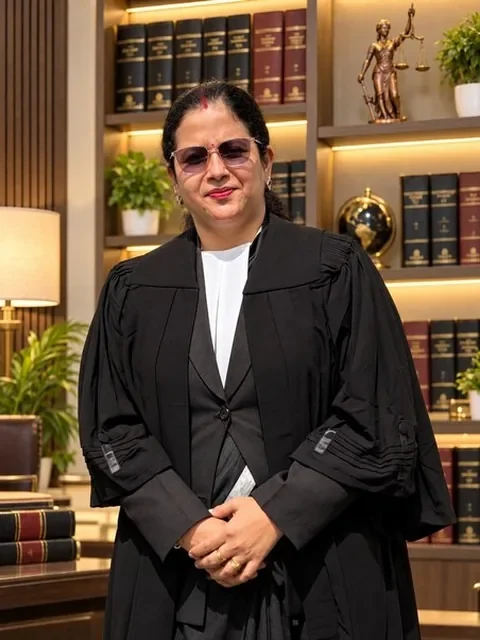
Advocate B.K. Singh and Advocate Sadhna Singh work on every matter the firm takes. He decides the legal strategy, settles important drafts and argues contested hearings, particularly in the High Court, the Supreme Court and the tribunals. She is usually your first contact; she reads the papers, drafts pleadings, runs the matter from day to day and keeps you informed.
Clerks handle filing, inspection of records and certified copies, and research support helps with case law. Where a case needs a lawyer in another state, or an Advocate-on-Record to file in the Supreme Court, we work with associate counsel and tell you in advance who they are and what they will do. The our team page explains how the work is divided.
What if it is urgent: an arrest, a raid or a hearing tomorrow?
Tell us at once, by phone or WhatsApp, and lead with the urgency. In criminal matters the first hours count: whether to apply for anticipatory bail under section 482 of the BNSS, whether the offence is one where the police should issue a notice under section 35 instead of arresting, and what the person should and should not say when questioned. The Supreme Court's guidance in Arnesh Kumar v State of Bihar (2014) against unnecessary arrest in offences punishable with up to seven years is still the starting point for many of these conversations.
For civil emergencies, such as a demolition notice, a bank's possession date or someone building on your land, the remedy is usually an urgent application for an injunction or a stay, and the papers have to be prepared the same day. If you expect the other side to rush to court against you, a caveat under section 148A of the CPC makes sure you are heard before any order is passed; it stays in force for 90 days.
We cannot promise that an urgent matter will be listed the same day, because that depends on the court. What we can do is have the papers ready and filed quickly, with the urgency clearly explained to the registry.
Mistakes people make before they see a lawyer
- Signing without reading. Settlement deeds, police compromises and bank restructuring letters are often signed in a hurry. Some cannot be undone, and some give up rights you did not know you had.
- Replying to notices themselves. A reply written in anger can admit facts you would otherwise dispute. Silence is sometimes worse. A short, careful reply through an advocate is usually the right middle course.
- Keeping only WhatsApp copies. Electronic records are evidence, but a court will want a certificate under section 63 of the Bharatiya Sakshya Adhiniyam before relying on them. Keep the original phone, export chats properly and delete nothing.
- Waiting for the other side to act first. Limitation runs whether or not anyone is talking. Negotiations do not stop the clock unless the other side acknowledges the debt in writing.
- Filing in more places than needed. Parallel complaints to the police, the consumer commission and a civil court on the same facts can weaken all of them. Pick the forum that gives the relief you actually want.
- Paying cash without receipts. In property and business disputes, cash payments are hard to prove and can raise tax questions. Bank transfers and written receipts save years of argument.
Can you help if I live outside Delhi or abroad?
Yes, for cases in Delhi NCR and in the tribunals that sit in New Delhi. Many clients live elsewhere: NRIs with property in Dwarka or Noida, families in Bihar or Uttarakhand with a case in a Delhi court, companies with a petition before the NCLT. Consultations take place by video, documents come by email or courier, and you attend court only when the law requires it, for instance to give evidence or to appear for the motions in a mutual consent divorce, which some family courts allow by video in suitable cases.
If you cannot come to India, a power of attorney lets a family member act for you in many civil and property matters. It has to be executed properly abroad, usually before an Indian embassy or consulate or before a notary with an apostille, and then presented here for stamp duty within the time allowed. Details of our offices and how we cover courts outside Delhi NCR are on the offices page.
Is what I tell a lawyer confidential?
Yes. Communications between you and your advocate made for the purpose of legal advice are protected from disclosure by law, and the professional rules forbid us from using them against you. That protection has been carried from the old Indian Evidence Act into the Bharatiya Sakshya Adhiniyam 2023. Inside the firm, only the people working on your matter see your papers.
This website is information, not advice, and reading it does not make you our client. Under Rule 36 of the Bar Council of India Rules, advocates may not advertise or solicit work, so you will find no testimonials, success figures or claims about results here. The disclaimer explains this in more detail. An advocate-client relationship begins only when we have agreed in writing to act for you.
What to do this week
If you are reading this because something has happened, do three things this week. Find every date on every paper and put them in one list. Gather the documents into one folder, in date order, with copies. Write a one-page account of what happened, in your own words, with names and dates. That single page saves more time at a first meeting than anything else you can bring.
Then get in touch through the enquiry page or by phone, and mention the nearest date first. If it turns out that your matter does not need a lawyer at all, we will tell you that too.
Frequently asked questions
Where are the offices of B.K. Singh & Associates?
The firm has two offices: Sector 7, Dwarka, on Ramphal Chowk Road near ICICI Bank in New Delhi, and Office 1203, Cloud9, Tower S3, Vaishali Sector 1, near Vaishali Metro in Ghaziabad. Both are open Monday to Saturday, 10 am to 7 pm. Meetings are by appointment, and video consultations are also available.
How do I book a consultation with a lawyer at the firm?
Call or send a WhatsApp message on the number shown on this page, email us, or use the online enquiry form. Give a short description of the problem and the nearest date on any notice, summons or order. We will tell you which papers to send and fix a time at either office or by video.
Do you take criminal cases in Noida and Ghaziabad courts?
Yes. We appear in the Gautam Buddh Nagar district court at Surajpur and the Ghaziabad district court for bail, trial and related applications. Appeals, revisions and quashing petitions from these courts go to the Allahabad High Court, where we appear or work with local counsel, depending on what the case needs.
Can I consult a lawyer online in Delhi?
Yes. Consultations by video call work well for most matters, particularly for NRIs and clients outside Delhi NCR. Send clear scans of the documents in advance so the advocate has read them before the call. Court appearances, signing affidavits and some filings still need you or your authorised representative to be physically present.
Do you charge for the first consultation?
Whether a consultation fee applies is discussed when the meeting is fixed, and we do not publish fee figures on the website. If you decide to go ahead with the matter, the fees for each stage are agreed in writing. Court fees, stamp duty and other out-of-pocket costs are listed separately so you can see the full cost.
Which courts and tribunals do your advocates appear in?
The firm appears before the Supreme Court, the Delhi High Court and other High Courts, the district courts of Delhi and the courts in Noida and Ghaziabad. Tribunal work includes the NCLT and NCLAT, the DRT and DRAT, consumer commissions up to the NCDRC, the National Green Tribunal and the Central Administrative Tribunal.
Can a court case be settled after it has been filed?
Yes, at almost any stage. Civil suits can be compromised and recorded by the court, and many criminal offences are compoundable. Where an offence is not compoundable, the High Court can sometimes quash the case on settlement under section 528 of the BNSS. Courts also refer parties to mediation or Lok Adalat on their own.
How long does a civil case take in Delhi?
There is no reliable answer, and anyone who gives a fixed timeline is guessing. A simple suit in a district court commonly takes a few years to judgment, longer if there are many witnesses or interim appeals. Summary suits under Order 37 CPC and commercial suits with strict timelines can move faster. Settlement is often quicker than any judgment.
What is the difference between an advocate and an Advocate-on-Record?
Any enrolled advocate can appear and argue in courts across India. In the Supreme Court, however, only an Advocate-on-Record, who has passed a separate examination, can file cases and appearances. Other advocates can argue there when instructed by an Advocate-on-Record. We work with Advocates-on-Record for Supreme Court filings.
Can you send a legal notice on my behalf?
Yes. A legal notice is often the first step in a cheque bounce, property, recovery, consumer or employment dispute, and in some cases the law requires one. We read the documents first, because a notice that states the facts wrongly can be used against you later. Keep the postal receipt and tracking report once it is sent.
Do I have to come to court for every hearing?
Usually not. Your advocate appears on most dates. You need to attend when your evidence is recorded, for mediation, for the motions in a mutual consent divorce, and in criminal trials unless the court has exempted your personal appearance. We tell you before each date whether you need to be there.
Can a company retain the firm for regular legal work?
Yes. Businesses often need regular advice on contracts, notices, recovery, compliance and employment issues rather than a single case. We agree the scope in writing, with a clear line between retained advisory work and any litigation. The corporate consultancy page explains how this works.
Do you handle cases for NRIs?
Yes, for matters in Delhi NCR courts and the tribunals in New Delhi. Common NRI matters include property disputes, matrimonial cases, inheritance and false complaints. Much of the work can be done by video and email, and a properly executed power of attorney lets a family member act for you here in many civil matters.
Will a junior lawyer handle my case?
No. The two advocates of the firm work on every matter. Clerks and research support help with filing, records and case law, but advice, drafting and appearances are by the advocates, or by associate counsel you have agreed to in advance where a case needs a lawyer in another court.
Can you tell me whether I have a strong case before I hire you?
We can give you an honest first view once we have read your documents. A view given without papers is only provisional, because cases usually turn on what the documents show rather than on what people remember. If the case is weak, we will say so and explain whether another route, such as settlement, makes more sense.
What happens if I miss a court date?
In a civil case, the suit can be dismissed for default or the court can proceed against you ex parte. In a criminal case, the court can issue a warrant, and missing dates can lead to bail being cancelled. Most of these orders can be set aside on an application showing good reason, but it is better not to need one.
Do you take matters before the NCLT and DRT?
Yes. We handle insolvency petitions, replies and appeals before the NCLT and NCLAT, and recovery applications, SARFAESI challenges under section 17 and appeals before the DRT and DRAT. These tribunals have strict time limits and pre-deposit rules, so it helps to come in as soon as a notice is received.
Can the firm appear in the Supreme Court of India?
Yes. The firm's founder appears before the Supreme Court in special leave petitions, writ petitions, transfer petitions and appeals. Filing in the Supreme Court has to be done through an Advocate-on-Record, and we work with one for that purpose while preparing and presenting the case.
How do I know which page on this site is right for my problem?
Start with the document you have received: an FIR, a bank notice, a divorce petition, a builder's letter. The table headed Which page fits your problem, further up this page, matches common documents to the right forum and page. If your problem fits more than one page, or none, send us a short note and we will point you to the right place.
Can I get a second opinion on a case another lawyer is handling?
Yes. Many clients come for a second opinion at the appeal stage or when a case seems stuck. We read the pleadings and order sheets and give an independent view. If you then decide to change advocates, the usual course is a no-objection from the earlier advocate and a fresh vakalatnama filed in court.